Tuesday, 20 December 2022

How To Get Your Bum In Your Writing Chair More Often

Quit stalling. Sit down and write
Photo by Timo Volz on Unsplash
No one ever regrets being a writer.

Yet often writers regret not writing.

It’s not enough to be a writer, it’s about how often you apply your backside to your writing chair (as I’ve said often.)

The question is that, if we love to write, why is it so hard to sit down and write some days?

If you read about all the successful writers who’ve written dozens, and sometimes, hundreds of books, they all say they have a rigid writing routine that they stick to no matter what.

And that, (in my humble yet extremely accurate opinion) is the biggest secret to their success.

Yes, they are talented writers, but that means nothing at all if they don’t sit down and write.

They never say that they didn’t feel like writing so they played computer games instead.

Nope.

No matter how much they wanted to do something else, they didn’t let procrastination get the better of them.

How about you?

Do you give in to procrastination?

Or do you put your butt in your writing chair whether you fell like it or not?

How many books could you write every year if you put your bum in your writing chair more often?

The thing is, no one’s stopping you. 

So stop reading this and start writing.


Stop procrastinating and take back control of your life


Thursday, 15 December 2022

Stop Letting Yourself Down

Don't just lay there. Write!
Photo courtesy of kaboompics.com

Do you know what the worst kind of decision is?

Surprisingly, it’s not a bad decision.

It’s indecision.

That’s because when you’re indecisive about something you end up doing nothing.

To quote Scarlett O’Hara from Gone With The Wind: -

“I don’t want to think about that right now. I’ll think about it tomorrow.”

That is blatant procrastination. Putting off doing something, not because you can’t do it, because you just can’t be bothered.

And as we all know, once we put off doing something, we usually never do it.’

Just think what your life would be like if you hadn’t procrastinated: -

    - How many books would you have written?

    - How many blogs would you have?

    - How many blog posts would you have written?

    - How many emails would you have sent?

    - How many subscribers would you have?

    - How many books would you have sold?

    - How wealthy would you be right now?

    - How great would you feel?

How amazing and different would it be if you just got up and got on with things every day?

And I don’t mean only about writing, but about everything in your life. About replacing all the timewasting things you do with productive things that improve your life and move it forward.

That’s what my latest eBook is all about.

It’s about why you waste time and, most importantly, how easy it is to stop procrastinating and take back control of your life in every way.


Stop Procrastinating And Take Back Control of Your Life.


Tuesday, 13 December 2022

How I use Siri to Read eBooks and Articles

Listen to eBooks with Siri.
Image by Felix Lichtenfeld from Pixabay
I love listening to audios when I’m busy doing other things (like household chores or cleaning the car).

In fact, if I’ve got something that I’m eager to listen to, I’ll find ‘busy’ chores to do because I must be doing something while I listen. I can’t just sit and do nothing so I figure I may as well get plenty of chores done while I’m listening.

I rarely buy, or mostly never buy, audio books, but I do borrow them from the library.

I also listen to podcasts too. 

I have the Listnr app on my iPhone which, as well as having my favourite radio station on it, Buddha Hits, it also has some interesting podcasts on things like true crime.

I also have the UK’s BBC app that has many great radio plays and audio series.

But when it comes to books, I prefer to buy eBooks and if I want to have them read to me while I’m doing other things, I use Siri to read them.

I discovered how to do it a few years ago, and I’ve been listening to eBooks this way ever since.

All I do is open an eBook on my iPhone (usually in my Kindle app) to the current page I’m reading.

I then put two fingers at the very top of the screen and quickly swipe down.

Siri’s audio controls immediately open and she starts reading from the top of the page and continues reading until I press pause.

Siri can also read long articles online if I tap the “Reader View” icon in the URL address bar at the top of the page and then swipe my two fingers down again.

It’s so quick and easy to do and means I can ‘read’ eBooks while I’m busy doing other things.


Read Something That Will Change Your Life

I write books designed to change your life.

From novels that will tug at your heart strings, instill fear and get your heart pounding, to educational books that can help you earn more money, and life-altering self-help books.

All will leave you thinking differently and some will even help you change the way you live and enable you to start living the life of your dreams.


Tuesday, 6 December 2022

The Perfect Gift To Give

Books make the best gifts
Image by Pexels from Pixabay
I’m not one for gift giving.

I don’t give many gifts and I never accept any either.

Many years ago, I used to be part of the gift-giving hoard, but then one day I wised up and cut Christmas out of my life. It was one of the best things I did.

I still bought gifts for my own children, but not for anyone else. And I didn’t put up decorations, send cards, or attend any obligated get-togethers.

I just said, “I don’t do Christmas.”

It made the holiday period so much easier. It was a huge relief.

I always call Christmas my day off. It’s a day when I do absolutely nothing. I just do whatever I want. I don’t even cook.

Eventually, I cut out birthday gift-giving to adults. It’s always so difficult to choose things for other people, and I rarely received something I wanted, so I stopped giving gifts to adults.

It was also something I’ve never regretted doing.

The only people I still buy birthday gifts for are my grandchildren, but even they know that once they turn 18, they’re cut off.

But all through my time of giving gifts to everyone, and even now that it’s only the grandkids, my go-to gifts are always books.

I find that if you give someone a book, they’ll eventually read it. So it’s never wasted.

Books are good because they’re educational as well as entertaining. Even a novel can teach us things we didn’t know while entertaining us at the same time.

When the kids were young, I bought them sticker books, colouring books, puzzle books, and Dr Seuss Books. I bought them toys as well, but they always received books too.

For adults I buy novels, if I know the types of things they like, and I usually do because I ask people what types of books they read. I reckon you can tell a lot about a person by looking at the types of books they read.

And I know I’m not the only person who buys books as gifts. My book sales always go up around Christmas time, especially print books.

My most popular book around this time of year is “How Ton Quit Smoking Without Giving Up Cigarettes.” That tells me that there are a lot of unhappy smokers out there.

So if you’re struggling with what to buy someone, give them a book. You won’t regret it and either will they.

How To Quit Smoking
Without Giving Up Cigarettes


Saturday, 26 November 2022

Stop Procrastinating and Take Back Control of Your Life

What is Procrastination?
Image by dadaworks from Pixabay
Do you procrastinate? Do you know you have to do something but you just don't do it?

And do you find that when you put off doing something it gnaws at your mind? 

Avoiding doing what needs to be done, makes you feel bad.  It's on your mind and not in a small way. You feel like it's only bothering you a bit, but that prolonged niggling, can bring you down.

Yet still you procrastinate.

The annoying thing about procrastinating is that you know you're doing it. It's not an unconscious habit that you're not aware of. When you procrastinate you're completely conscious of what you're doing and you're aware of your behaviour.

So why do you do it? Why do you put off doing things you know you should be doing?

Is it laziness?

No.

Is it because you don't have enough will power and discipline? 

Not really. These things can help, but they can only take you so far.

So what can you do about it?

You start by understanding what is procrastination.

It's an avoidance tactic.

Next you need to understand what you're avoiding and why. 

What's causing you to procrastinate?

Wouldn't you love it if you could take back control of your life and be a productive person?

Productive people are happy people. They feel good because they get things done.

No one likes a quitter, especially if it's yourself.

So stop letting yourself down.

And don't think that to stop procrastinating means to do more.

It means to do more of what matters and stop wasting your time doing things that don't matter just so you can avoid doing what you'd really rather be doing.

I'm going to be talking about this a lot more soon because I have a new book coming out next week called, Stop Procrastinating and Take Back Control of Your Life.

I can't wait for you to read it.

I'll tell you more about it soon.


UPDATE: My new books is now available.


Friday, 25 November 2022

My Hassle With Staff At Office Works

Angry staff at Office Works
Image by bookdragon from Pixabay
A couple of years ago, I bought a PDF eBook and I wanted a printed copy.  

The eBook came with printing permissions, so I uploaded it to Office Works, set up how I wanted it printing and binding, paid the cost, and waited for an email to tell me when it was printed and ready to pick up, which came through the next day.

Easy.

A few weeks later, I had another PDF eBook I wanted to print, so I set it up on the Office Works website again.

The next day I received a call from a woman who said she was a manager at my local Office Works store, and she said my eBook couldn’t be printed because it was copyrighted to the Author.

I explained that the eBook had permission for printing, and I asked her if she’d looked at the permissions of the eBook.

She said it didn’t matter what the permissions were, they couldn’t print it.

It was clear that she had no idea about copyright or printing permissions.

I tried to explain it to her, but she insisted that because of copyright, only I could print it, not them, but if I came to the store and printed it, they would put a cover on it and bind it for me.

So, I said, “So you’re saying that the only difference between you printing it and me printing it, is who pushes the start button on the printer?”

She was silent for a few seconds, then said, “Yes. That’s exactly what copyright means.”

I said, “How do you know? You’re not a copyright expert. You’re a shop assistant.”

With that, she hung up. I contacted Office Works online and asked for a refund.

I no longer use them for my large-volume printing needs. It seemed ridiculous that one person at the company, who clearly knew nothing about copyright, could dictate who pushes the start button on the printing machine.

The whole conversation with her, plus my time spent setting up the print job, getting a refund, and getting it printed elsewhere, was a waste of my time. I usually protect my time because, as a writer, it’s extremely important to me. My wasted time with Office Works could have been spent writing a chapter of a book or a few online articles.

Which is why I prefer working alone.

Many people feel that being a writer is like subjecting yourself to a life of solitary confinement.

But I disagree.

Being a writer does mean spending a lot of time alone, and spending hours every day speaking to no-one, but that’s the way I prefer it.

Being a writer is my mission in life, which is why I’m always happy to go home and work on my writing mission.

And I don’t have to let others into my writing time.

Except when I have to deal with ignorant staff at Office Works.


Mission Critical For Life
Start Living Life On Your Terms By Pursuing Your True Life Mission


Tuesday, 22 November 2022

The Easiest Way To Write And Publish Books

Publish every book you write and publish them all over the world

When it comes to book writing and publishing, it doesn’t matter if you’re a seasoned writer, or a newbie writer. If you want to SELL lots of books, then you need to WRITE lots of books. You also need to publish lots of books, and you don’t need to do a lot or know a lot to be able to do it.

You just need to keep it simple.

And the way to do that is through e-Publishing, because you don’t need fancy formatting, or a complicated cover, and your books don’t have to be huge tomes.

Just write short to medium books and publish them through Amazon’s KDP Publishing.

You can upload your manuscript as a simple Word document. Or if you prefer, MAC computers have eBook creation software built right into the system for free.

eBooks don’t need a complicated cover, only a flat cover image, and KDP has free templates and free images that you can use.

All you need is your manuscript as a simple document including a copyright page and any other pages you want to add, a flat cover image, and upload it all for free and set a price you want to sell it for.

Author John Locke began this way. He uploaded his novels, sold them as eBooks, and sold over a million copies in less than a year.

I’m not saying that you’ll have as much success as he did (very few writers do), but you won’t sell any books unless you start.

And you can start as easy as K-D-P.

If you want to learn more about publishing, you can do it along the way.


Mastering Book Publishing
Discover How To Make Money Publishing Books On Amazon


Discover how to make money publishing books on Amazon


Thursday, 17 November 2022

How To Sell More Books Than Ever Before


Image by OpenClipart-Vectors
from Pixabay

I was recently re-reading the fascinating book by Dean Wesley Smith, Think Like a Publisher. It's been updated several times.

The reason I was reading it again is because it’s the middle of November, so the New Year is almost upon us, so I need to start making serious plans for next year.

I was going through the book, taking notes and making plans, and it was all so interesting and useful that I wanted to share a few insights with you here.

In the book it says to be successful and sell more books, you must stop thinking like a writer/self-publisher and start acting like a publisher with a business to run (and to that end I’ve got amazing plans for next year).

What you need is a realistic publishing schedule, with the emphasis on REALISTIC.

Think of how much you can write in a month and from there calculate how much you can REALISTICALLY achieve in a year.

You need to devise a credible schedule for one year. It should include books, short stories, freelance work, articles, marketing, e-Publishing and print publishing.

Having deadlines in your schedule is a must. A publishing business lives or dies with deadlines.

You can adjust how you work as you go along if it’s necessary, but you must stick to your publishing deadlines. This is why your schedule must be realistic.

You can start practicing from now until the end of the year to see how much you can comfortably achieve in a month.

Don’t forget to schedule everything including marketing your books and doing all your online work.

And most importantly, make sure you stick to your deadlines, no matter what, even if it means burning the proverbial midnight oil a time or two.

Just be realistic about how much you can do and treat your publishing schedule like a business.


Thursday, 10 November 2022

The Almost Effortless Way To Write Books

notebooks on veranda ready for writing
My desk, where I write, is in front of a window.

Nearby, a new block of apartments has been built.

For weeks I’d see the huge crane being used to lift pallets of building materials up to the builders on all levels, and to remove all the big skips full of rubbish.

It was all quite fascinating to watch.

Then one day, as the building neared completion, the crane was taken down because it was no longer needed. I was interested to see how they did it because I’d never seen it done before.

Two men were at the top of the big crane, several men were on the ground below and they had a smaller crane on the back of a truck to help take down the big crane.

The two men up top worked carefully and methodically to dismantle the big crane piece by piece and working from the end of the long arm on one side to the balancing blocks on the opposite side. It was a careful process of knowing what to remove and when, to keep the top of the crane balanced.

Cranes that size rarely fall, but it can, and does happen.

The two men seemed to be following a process that they’d done many times before. They worked swiftly and efficiently so keeping the crane upright was not a problem. The whole job was done smoothly.

As I sat writing, I kept glancing up to see how the dismantling was progressing and I realised that they had a process for every part of the job, so everyone knew what to do so everything got done.

And I thought that it’s the same with writing books. It’s something I’ve done many times, so I know the process, and the more I do it, the easier it gets because I know every step in the process, making it simple and effortless to follow the steps:

Idea

Outline

Cover

Marketing

Writing

Editing

Proofing

Copyright page etc.

Publishing

Working through a writing and publishing process several times makes it faster and easier with less thinking and more doing.

It also makes the whole process more pleasant to do which makes me look forward to doing it again.


The 12 Month Writing Challenge


Tuesday, 8 November 2022

How To Pitch a TV Show Idea & a Free Money-Making eBook

Filming a live TV show.
Image by F. Muhammad from Pixabay
Today I received an email from Google about what are the most popular parts of my website, RuthIsWriting.com. 

So I thought I'd talk about it here just in case you want to look at it too.

It seems that the most popular page on my site, for the last month, was the article titled:

How and Where to Pitch an Idea for a TV Show

It seems like a lot of people must have great ideas about TV shows and not know what to do about it. 

And it is a good article because it tells you not only how to pitch an idea, but also what types of shows to pitch, and where to send your idea.

One (of many) of the free eBooks that I make available for download was also extremely popular last month.

It's a PDF eBook written by Dr Joe Vitale.

The Greatest Money-Making Secret in History

It really is a great book as well as an entertaining read. 

Feel free to go and download your own copy. 

But be warned. It's not a small book. It's over 90 pages.

On the last page it contains links to some of Dr Joe's books including one of my favourites,

Hypnotic Marketing

That is a great book (and again, such an entertaining read) and a must-read if you want to know how to write so persuasively that you almost hypnotise your customers.

In fact, the whole book is written hypnotically which is probably why it's so un-put-downable.

So if you've got a great idea for a TV show and you want to pitch it, and you want to read all about how to have more money than you ever have before, I've got just what you need over at RuthIsWriting.com.

And all for F-R-E-E-E-E....


Friday, 14 October 2022

The Ugly Truth About Wasting Time


Lazy lion sleeping on a log
Image by Holger Stephan from Pixabay
I find that some days start off great and keep going. 

I bound out of bed as soon as the alarm goes off at 6am, and by 7.30 I’m washed, dressed, the bed is made, breakfast is over, and the dishes are washed and put away.

Days that start like that, tend to keep going.

Yet there’s other days when I roll over in bed, fall back asleep, get up late, and knuckle-drag throughout the whole day, not feeling like doing much, and not getting much done.

Those are bad days because I achieve so little and all day I feel like I’m not only wasting time but wasting the whole day.

And one thing I know for sure is that wasting time never makes me feel good. It makes me feel bad, and that bad feeling follows me throughout the day.

Time wasted, makes me feel bad because I know I’m wasting my life. After all, time is all we really have.

Thankfully, those types of day don’t happen very often, and thank goodness for that because they are really depressing.

Yet there are people I know who spend their whole lives like that.

They spend every day doing nothing much of anything. And they say it’s because they feel too depressed to do anything. But what they fail to realize is that the reason they feel depressed is because they’re wasting their lives away.

Who wouldn’t feel bad living like that?

You can always tell who these people are because they’re lazy and have dirty homes, bad diets, and are late sleepers.

Sadly, it doesn’t take much for anyone to feel down about wasting time.

Something as simple as not getting that book written, or not posting to your blog often, or not getting your smaller writing projects done, can make you feel down in the dumps.

I recently read a little book called “Wake Up and Live.” It’s an old book but it has a timeless uplifting message about not wasting time, and achieving life goals.

At the moment, you can pick up a Kindle copy of this remarkable little book for only 49c on Amazon.

And it could be the 49c that changes your life.


What would you do if you knew it was impossible to fail? Wake Up & Live!


Wednesday, 5 October 2022

A Little-Known ‘Trick’ That Will Get You Writing Fast When You Feel Stuck

It happens all the time to every writer. 


You’re writing and doing great, then all of a sudden, you suffer from ‘brain fog’ and your mind goes blank and you can’t think of what you were going to write next or how you were going to phrase it.


Try as you might, you can’t get back on track because your creative mind is bogged down and seems like it’s switched off for good.


So what should you do?


I learned a little-known trick that works for just about anything for when you get mentally ‘stuck’ and can’t keep going. It doesn’t matter what it is, whether it’s writing, sorting out cupboards, doing a crossword, planning a vacation, writing a to-do list, or just about anything else. It works for everything.


And strangely enough, I learned it from watching Rugby League games.


Rugby League is a popular sport here in Australia and I watch it all the time, all season long and right up to the Grand Final. I also watch the World Cup when it comes around every 4 years.


And there’s something that I learned from watching these games.


Each match goes for 40 minutes each way, with a 10 minute break in the middle which is when the teams go back into the sheds and sit down while their coach talks to them (or yells at them if they’re losing).


Usually, in the first half, one team will have scored more than the other, and sometimes much more.


But that 10 minute break always, without exception, makes a difference to how they all play in the second half.


Often the winning team will be so far ahead in the first half, that they get complacent and don’t try as hard in the second half and can even end up losing.


Other times, the losing team in the first half will come out strong in the second half and be the only team to score and come out way on top.


The half-time break can also have other effects like the winning team coming out even more revved up, or the losing team coming back out on the field feeling already depleted and hopeless and so lose by far more than they did in the first half.


Rarely, if ever, does that 10 minute break make no difference to how each team plays in the second half.


And having a break is the ‘secret.’


If you’re writing, and you suddenly find yourself struggling to write the next word, take a break. 


It only needs to be a five minute break, but you must get up and move away from your computer. Don’t read and don’t stare at another screen (like your phone).


Move away from your keyboard and do something physical. Something different.


Pat your dog, make a cup of coffee, go to the toilet, stand outside and breathe deeply, do a few stretching exercises, meditate.


Do whatever you want to do, but it needs to be something different to writing. Just like the rugby teams go indoors and sit down on their break, which is completely the opposite to what they were doing when they were playing, you need to do something completely different too, something that doesn’t involve reading or staring at a screen.


And that’s all it takes to have a mind shift, is to shift your mind away from your work for just a few minutes.


Reading this, you probably don’t believe me. But just try it for yourself.


Take regular short breaks from your writing, especially if you’re writing for long stretches of time.


Five minutes is all you need and once you sit back down, you’ll be able to carry on.


Trust me. It works.


The 12 Month Writing Challenge

Write and Publish 12 Books in a Year


https://ruthiswriting.com/books/12MTH.html


Thursday, 29 September 2022

Don’t Wait For Your Muse. Just Write.

Image by Gerd Altmann from Pixabay
The hardest part of writing for most writers, is starting. The physical act of walking to our writing chair and sitting down seems like the last thing we want to do some days.

What stops us is fear. We’re scared because we don’t know what to write.

When I’m in the middle of writing a book, and I have a good outline to work from, I’m enthusiastic to sit down and get to work every day. But when I have articles to write, or I have to start mapping out a large writing project, then I’m a lot more reluctant to write.

Horror writer, Stephen King, said that he sits down and writes at the same time every day regardless of how he’s feeling. No matter what, he propels his backside to his writing chair and starts writing straight away.

He says that many would-be and amateur writers believe that they can’t start writing if their muse isn’t there. He also says not to wait for your muse because it won’t turn up for work until you do.

And I’ve noticed that this is how successful writers work. They don’t wait for inspiration to strike or for their muse to show up. They just sit down and start writing.

Novelist, Dean Wesley Smith, takes it a step further. When he sits down to write every day, or should I more correctly say every night because he only works in the evenings, not only does he not wait for his muse to strike, he also has no idea what he’s going to write until he sits down.

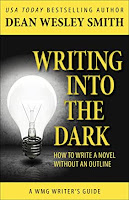
He writes by a method he calls “Writing into the dark” where he only knows the bare bones of what he’s going to write. In his book, “Writing into the Dark: How to Write a Novel without an Outline” (https://amzn.to/3EKs1Vl) he says that when he starts a new novel, all he has in his head is a character, their mood, and a setting. With only those three things he starts writing his first page and from there the ideas flow as he writes. It really is fascinating to read about his thought process.

If you want to sit down and write but don’t know where to start, do a search online for a random word generator, pick 3 words and write for 5 minutes. I’m always amazed at how much I can write in 5 minutes without knowing anything except the 3 words, which I have to use in the first paragraph. It turns out that I can write ⅔ of a page.

Free writing works for both fiction and non-fiction and they are both a lot of fun and it helps to get you into the writing ‘zone’ quickly. 

For non-fiction, choose a random subject and write a list of 10 question you could ask about it. Done well, those 10 questions could become chapter titles for your next book. :)

But however you do it, when you need to write, sit down and do it.

Don’t wait for your muse. It won’t turn up for work until you do.

And most importantly, enjoy writing.


TAKE THE MONTHLY WRITING CHALLENGE
And Write More in 4 Months Than You Ever Have Before

The Monthly Challenge Writing Series


Stop Dreaming and Start Writing


Thursday, 22 September 2022

If You Can’t Teach Yourself, You’re a Liability

Helpless beetle laying on its back
Image by Gerd Altmann from Pixabay

Time and time again, people email me for the smallest reasons, usually because they either don’t know how to look something up on the internet themselves, or they just simply can’t be bothered.

Over the past 20+ years, I’ve learned a lot about writing, publishing, coding, and how to earn all my income from my writing. And not once did I email someone and ask them how to do it.

And I honestly believe, that if you are so helpless, that in this age of information you can’t teach yourself what you need to know, then you are your own biggest liability.

Most things are simple to learn and can be learned from the internet. Even if it’s something that looks complicated (like coding), once you start learning, it becomes much clearer and you find that it’s not as complicated as you first thought.

Other things are simple and it only takes a few minutes of searching online to find what  you need.

But if people need to teach you simple things, you’ll always be a liability to yourself.

One of my popular books, Living the Laptop Lifestyle (https://cheritonhousepublishing.com/books/LLS.html) was written from all the knowledge I gained myself about how to create a website and earn a living online. This book is popular because it makes it quick and easy for anyone to have an online writing business.

And this is one of many books and courses available online that anyone can download without having to ask for help from someone else.

In fact, everything you need to know is available online in one way or another. And much of it is free.

But if you can’t find what you need yourself, you’ll never be successful.

Do whatever it takes to become a successful writer. 

Just don’t expect others to do the work for you.


“If you can’t help yourself, you’re a liability.”
~ Justin Welsh


If you need more help go to https://cheritonhousepublishing.com/books.html and find what you need to help you move forward.


Thursday, 1 September 2022

Why Aren't I Writing? And What I'm Doing About It

Woman lying in leaves instead of writing
Photo by engin akyurt on Unsplash
At the beginning of this year, 2022, I stated that I was going to write and publish a book a month.

I was all hyped and ready back in December 2021, sure that I could fulfill my mission. I had it all planned so what could go wrong?

Life, is what could go wrong.

It's not that I haven't written any books. I've written and published 4 books so far with another almost finished.

My writing plan began to unravel early when, at the beginning of the year, without knowing it was even going to happen, I moved home. 

I originally had no intention of moving, but then property prices skyrocketed, and we stumbled upon a better place to live. So we took advantage of the price increases, put our place on the market, sold it in 3 weeks, and moved. And as we all know, moving can suck your life away in the time spent to organise it all, do the actual move, and then settle into our new place and find our way around the new neighbourhood.

Also a few family issues came up that I had to deal with.

But that's still no excuse for not getting my writing done. I keep telling myself that if I had to go out to work (which I'm SO GRATEFUL that I don't have to) I wouldn't be using all these things as an excuse not to go to work. I'd deal with them and still get to work on time every day.

The problem with working at home, is that I'm at home, so I constantly get distracted. But again, that's no excuse not to get my writing done.

Another thing that happened is that I downloaded a fascinating eBook called "Writing into the Dark: How to Write a Novel without an Outline," by one of my favourite authors on writing, Dean Wesley Smith. https://amzn.to/3EKs1Vl.

I usually always write with an extensive outline, but after reading his book I decided to try writing without one. DWS said that all you need to know before you start writing, is what genre you're writing in, and have a character and a setting in mind, and then start writing.

I began with one short story and then moved on to do more. At first it felt really strange to not have an outline and to not know what I was going to write until I wrote it.

But do you know what? It's fun. I've been writing quite a few short horror stories with no outline and no idea of what's going to happen in the story until I start writing. Not only is it fun, but it also makes me write fast because I can't afford to stop writing in case I lose the flow of ideas.

I'm not sure if I'd write a whole novel this way, but it sure is fun doing it with short stories. It also taught me that horror stories are my favourite to write. 

Who knows where this will lead me, but I'm having a ball doing it. I should have known that I'd enjoy it because I always love doing those 5-minute writing exercises, where you're given 3 words and you write for 5 minutes without stopping AND use those 3 words in the opening paragraph.

If you want to try it yourself, download your own copy of "Writing into the Dark" and give it a go.

But I digress. I was talking about why I haven't written as many books as I planned to.

The good news is that I'm planning to get back on track. No, I'm GOING to get back on track. I have a new plan and I'm going to work it.

At the same time, I'll still be uploading articles to my website and posts to this blog, and sending out my monthly writing newsletter, which will be hitting my subscribers' inboxes next week. So, if you're not a subscriber, now would be the perfect time to sign up, plus you'll receive a free eBook to help you write more and earn more.

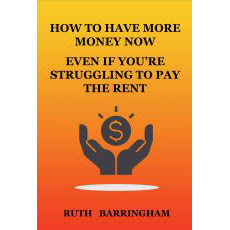
On another positive note, my latest book, "How To Have More Money Now, Even If You’re Struggling To Pay The Rent" is already selling well. Read more about it and grab yourself a copy at https://cheritonhousepublishing.com/books/hthmm.html.

And you should see another book from me soon.

Here's hoping you're getting plenty of your own writing done.


How to Have More Money Now


Writing Into The Dark by Dean Wesley Smith. Click to read more


Thursday, 25 August 2022

Always Have Money So You're Free To Write

money, notes and coins
Photo by Katie Harp on Unsplash
One problem that many writers face is not having enough money to live on while they build their writing career.

Being a writer means being in it for the long haul. You won't get rich overnight. Instead you have to keep writing while your portfolio and your income build up over time.

Living in times of financial feast and famine is also common because you never know how much you're going to earn each month. It all depends on book sales, website income, freelance income, and how much writing you do.

I've been fortunate because money is something that I've never run out of, no matter how low my income has been over the years. No matter how little I have, I've always had enough money to live on.

I look at money differently to most people. When asked about how I always seem to have plenty of money, I try and explain it, but most people just don't get it.

That's why I wrote a book that explains it all.

"How to Have More Money Now, Even If You're Struggling to Pay the Rent." 

This is my latest book and it explains it all.

It's a journey of learning and understanding about money so that even years ago, as a divorced, single parent on welfare, money wasn't an issue. In fact, when I met my now husband, I was on holiday in Europe.

Many have asked me how I did it. How was I living on welfare yet holidaying abroad?

It was easy and my book explains it all, including how I managed to have more money in just one week.

So like the title says, even if you're struggling to pay your rent, you can have more money right now.

If you think you're broke, think again. Download a copy of my book to find out what I did and how you can do it too.

All it took was the ability to look at money differently.

If that all sounds too cryptic, click the link below to go over to Amazon and have a sneak peak using the "look inside" free feature and you'll see just how easy it is to have more money now.


Friday, 19 August 2022

Write From Inspiration Not Desperation

Image: woman at computer too tired to write
Photo by Josefa nDiaz on Unsplash

All writers are the same There are days when we can’t wait to sit down, get our creative head on, and start writing. Yet other days it seems like no matter how hard we try, the ideas just won’t come, but we keep on trying anyway because we need to earn money.

This is the difference between writing from inspiration and writing from desperation.

The answer is to have more days of inspiration when you sit down, start writing, the ideas flow, and you get lost for hours in the writing zone.

But how do you make that happen? How can you turn a day of desperation into a day of inspiration?

The solution is not to let it get you down. Stop looking at your project as one big project. Simplify it instead, using the following ideas.

  1. Break your project into smaller tasks. Write down the steps you need to take to get your writing done. Your list might include things like, research points to cover, find people to interview, write a brief outline, expand each point into 3 questions, find answers to the questions, write, edit, proof, submit. Whatever the steps are, write them down, arrange them in the right order, and being at number 1.
  2. Write a detailed outline. If you’re stuck and can’t get going, start with one sentence about what you’re going to write, expand it into one paragraph, then into one page, then each paragraph on that page gets expanded into a page… You get the idea.
  3. Use a timer. Before you start, set a timer for 33 minutes and don’t stop working no matter what. It doesn’t matter whether you’re listing tasks, expanding an outline, or actually writing. Set a timer first. This will help keep you focused and working. When the timer goes off, get up and go do something else for 5 minutes, something that doesn’t involve looking at a screen. Then sit down, set the timer, and start working again.

And that’s it. If you want to feel inspired to work, break your project down into tasks, create an outline, start your timer, and begin working.

Working this way means that when you sit down to write you know the first thing you need to do which makes it so much easier to sit down every day, because you’re not overwhelmed thinking about all the things you have to do. You only need to concentrate on number 1 on your list.

We are creatures who are motivated by our emotions, so beginning with a positive intention helps you work from inspiration every day, and stops neediness making your feel desperation.

All you have to do now, is begin.


Want to know how I earned over $4,000 writing articles in just one day?


I did it using my simple 15 minute article writing system which Includes Research, Writing and Proof Reading

How to Write an Article in 15 Minutes, or Less


Thursday, 11 August 2022

Does a Romance Novel Have to Have a HEA?


Stand By Me. A romance novel

I write fiction and non-fiction.

Two of my fiction books are romance novels.

One of my books is called Stand By Me and one reviewer on Amazon complained that the story didn't have a HEA (Happily Ever After) ending so it couldn't be classified as a romance story.

But I disagree. I believe that a good story is a good story with or without a HEA, plus, I don't think a romance story necessarily has to have a HEA. A HFN (Happy For Now) is good enough. 

I also think my novel had a great ending that tied everything together.

And it was a Happy Ever After ending, although not in the traditional sense.

It's a story about a woman who wants her lover to live with her, but he won't. 

She tries to leave him and move on with her life without him but she misses him too much.

She even leaves him and takes up with a new love, but even though her new love is a wonderful man, she still pines for her old love, but he still won't live with her and she cannot for the life of her figure out why not.

To the reader and to the main character, his secrecy makes him seem like a bit of a ratbag, until she unwittingly learns the truth and realises that he's not a bad guy at all and now that she knows the real reason, she understands that they can never be together.

She is finally able to walk away.

That's a good ending isn't it?

She got the closure she needed and could move on whereas she couldn't before she knew the truth. She had been waiting for someone she could never have.

It is a surprise ending, and a good one. She discovers a truth that she could never have guessed.

So even though they never got together, they loved and laughed.

And then she was able to move on, and so was he.

Whether you think it's a HEA ending or a HFN, the ending still satisfies.

And because this novel is still selling, I'm having a HEA.

If you want to write a novel, write the one you want to write.

https://cheritonhousepublishing.com/books/SBM.html


Monday, 8 August 2022

How to Write 10,000 Words a Day

 
Hands typing on a keyboard writing a book fast
Photo by Kaitlyn Baker on Unsplash
A few weeks ago I was reading an article about how it’s possible to write a million words a years, and I thought, “That’s crazy.”

But it turns out it’s not as crazy say you think. Not only is it quite sane, it’s also quite do-able.

The author also said that we all write at the same pace, which is around 1,000 words/hour, which is only 16.6666 words per minute.

I pondered this, did a little math, and worked out that one million words divided by 365 days is 2,739 words a day. So if you wrote 2,739 words a day for a whole year, you’d have written a million words.

Hmmm. It doesn’t seem too unreasonable when you look at it like that.

So then I went back to the 1,000 words/hour. To write a million words at that speed, you’d have to write for 1,000 hours (1,000 x 1,000 = 1,000,000).

This means that if you wrote 1,000 wph for 2 hours a day, that’s 2,000 words a day which isn’t far off the 2,739 words a day needed to write a million words a year. In fact, 2,000 words a day is 730,000 words a year.

But what if you upped the ante and wrote 10,000 words a day? Even working a 5 day week you could achieve 50,000 words a week. That’s a whole book written in a week.

But is it possible to write 10,000 words a day?

According to the book, “2k to 10k: Writing Faster, Writing Better, and Writing More of What You Love” By Rachel Aaron (https://amzn.to/3ruC0bd) it’s more than possible.

At 1,000 word/hour you’d have to write for 10 hours a day. That’s a lot of hours.

But look at it a different way.

If you’ve ever tried speed writing you’ll know that it’s possible to write ¾ of a page in 5 minutes. Speed writing is where you’re given a writing prompt, or 3 words, you set a timer for 5 minutes and start writing. If you’ve never done it, you should. It’s really eye-opening to see just how much you’re capable for writing in such a short time.

Speed writing proves that it’s easily possible to write ¾ of a page in 5 minutes. So assuming a full page of writing is 300 words (it’s usually more), this means that you can write 2,700 words in an hour (¾ of a page in 5 minutes  x 12 lots of 5 minutes = 1 hour).

If you write like this for 5 hours a day, even if you drop the speed down to 2,000 words an hour, that’s still 10,000 words a day.

But the real question is whether or not it’s possible to write at this fast pace.

It is if you’re prepared. This means having a complete outline for your book so that you know exactly what you’ll be covering in each chapter.

Having a detailed outline leaves you free to write without stopping, just like speed writing. 

An outline means you don’t need thinking time, just writing time.

I work this way with all my books. Lately I’ve begun using shorter outlines, and while it’s possible to write a book this way, it slows me down because it means I need to have time to think while I’m writing.

But with a detailed outline, I can sit down and start writing straight away. Even if it’s been a day or two since I last wrote, I can look at my outline and see exactly where I finished and where I need to go.

Outlines make the writing process so much easier and faster.

And it only takes 2 to 3 days to go from idea to outline to detailed outline, and then you’re ready to start writing.

And even if you want to slow it down to just 10,000 words a week, you can still get your book finished in a month.

I wrote about this in the 4th book of my Monthly Challenge Writing Series, “The One Month Author: How to Write a Book Faster & Better.”

A simple step-by-step manual that leads you through finding an idea for a book, creating an outline, and turning it into a finished manuscript - in just one month.

Check it out now at: