Friday, 31 December 2021

My Writing Plans for 2022

New Year Writing Plans

So now it’s the end of 2021 and tomorrow is the first day of 2022.

I don’t know about you but I’ve got my writing plans in place for the next 12 months.

One thing I had to do was not only list everything I wanted to write, but also allot the time to do it. It’s no good saying what I want to do if I have no idea how I’m going to find the time.

So I did a plan of everything I want to write, and it includes books, ebooks, articles, blog posts and emails (amongst other things). I wanted to make sure I included everything so that nothing gets left out and I have enough time to do it all.

But it will still be a challenge with all that life throws up at us. Whenever I have a lot to do, the universe always throws up roadblocks and trip hazards.

But I’m determined to not let anything stop me completing my writing plan for 2022.

You can read it in it’s entirety at:


Tuesday, 28 December 2021

Writing When I Really Don’t Feel Like Writing

 
Writing when you don't feel like writing
Image courtesy of mohamed_hassan. Pixabay
It’s funny isn’t it that although writers say they enjoy writing, they often resist doing it. And I’m no different. Sometimes I think a pile of ironing looks more appealing than sitting down and writing.

So what is it? What makes us not want to write?

The truth is that resistance to writing is no different to the resistance we sometimes feel to other things. And it’s not the actual thing we have to do that’s the problem, it’s just the act of starting that seems hard.

Last week, Dean and I had plans for a day out We were really looking forward to it. But when the day arrived, we started to ask each other if we still wanted to go and maybe we could just stay home and sit by the pool, have a swim, and then go back up to our apartment, have lunch and watch a movie.

And while that would have been okay to stay home and relax, we eventually said no. We’d planned a day out so we were going. So we packed up and headed out.

And do you know what? We had such a great time. It turned out so much better than we originally thought.

So we can even feel resistance to fun things we want to do, as well as resistance to doing chores we don’t feel in the mood to do.

To make it easier to write when I don’t feel like it, I just sit down and look in my diary to see what I had planned, or I re-read what I’ve written the previous day, or type up some handwritten work. I start with something simple, and then it’s easy to keep going.

Sometimes I buy an ebook or a course or something else that intrigues me, that will give me direction, and makes me enthusiastic to write.

Next time you feel resistance to writing, do whatever it takes to get back into the writing zone fast. And don’t be afraid to invest in your writing future.


Living The Laptop Lifestyle


Friday, 24 December 2021

Working On My 2022 Writing Goals

It’s now so close to the end of 2021 and I still haven’t finished sorting out my writing goals for next year.

But I have been looking at all the things I do in a day/week/month, including sleeping, eating, and time with family. And all this certainly takes up most of my time.

I looked at my list and thought that many people work 40 hours a week and still do all this stuff so where am I going wrong, because according to my calculations, I only have 13 hours of writing time a week. That’s less than most people’s part-time working hours.

I gave it more thought and realised that no matter how I try and divide my time, every day is different. Some days I only write for a couple of hours, and other days I write all day. It seems to depend on how much I have to do and what mood I’m in.

And when I worked it out, I sit and write far more than 13 hours a week. But if that’s so, then how do I still fit in all the other stuff?

And even more confusing, if I now live in a small apartment so that I don’ have a lot to do then how come I have so much to do?

My poor little monkey mind could not figure this out. I’m no math genius, but these numbers just aren’t adding up.

So instead, I’m going to take a run at it from a different angle and look at what I actually do every day, hour by hour, and how much time it takes me. But I’m sure I already know, because it’s what I do every day. Now I’m really confused.

I’ve also been looking at what I want to write, and I already have so many ideas already, probably more than I can do in a year.

Or maybe I should push myself to do it all anyway? I’ll let you know how it goes.

I hope your writing plans are coming together too, and that 2022 will be your most profitable writing year ever.


Thursday, 23 December 2021

30+ Freelance Writing Markets to Keep You Busy Over Christmas

If you're anything like me, you find holiday times great for getting more writing done. Everything is closed so there is nothing to do but stay home and write (or go to the park, or the beach, or anywhere else outdoors to write if it's hot where you are, like it is where I live).

So here is a list of over 30 freelance writing markets that you can use for inspiration, writing practice, or to actually submit to and earn money.

Some of these markets pay up to $600 so it's worth taking a look through them.

Enjoy.

Eerie River Publishing
Looking for short, dark, nightmare-inducing horror stories with the theme of 'earth' for upcoming anthology.
Submission open Feb 1 2022
Word count: 1,500 - 7,000 words 
Payment: 1 cent cad per word
No reprints
Closing Date: Feb 28 2022
One submission per author per quarter
Other upcoming themes: Fire, Air, Water.


22 Publications on Religion and Spirituality
A list of nearly two dozen religious and spiritual publications that pay freelance writers.
List includes websites, literary journals and magazines, paying up to $500 for freelance pieces.


10 Fiction Markets
List of high-paying fiction markets with open submission windows.
Payment: $70 to $600 for Short Stories

After Dinner Conversation Magazine
Philosophy Ethics Short Stories
Any genre, and from any perspective. But it must spur discussions and require the reader to expand their mind.
Word Count: 
Children’s Stories:  Under 1,500 words
Young Adult:  Under 3,500 words
Adult:  1,500-7,500 words
Payment: 1cent/word. $30 Max


Wednesday, 22 December 2021

How My Own Advice Saved Me

 In my life, I’m quite the minimalist and live my life differently to most people. And what I love about my life, is that I’m not needy of money or company or social interaction.

I’m quite content to stay at home and write, and avoid socialising. Just recently some acquaintances were insisting that my husband and I go out for a meal with them and we REALLY didn’t want to. He’s  like me when it comes to socialising. Thankfully we managed to dissuade them without hurting their feelings.

I’m also quite the stockpiler when it comes to food. I buy things when they’re on special at the supermarket if it’s something we normally eat, or something we use like washing powder. I also keep a financial fund of 2-years income stashed away and never touched unless there’s an emergency like I’m too injured or ill to work, or there’s some other emergency that goes on for a while.

I used to think that I’d never need to touch that money because I couldn’t imagine a time when I’d need it, but it still gives me peace of mind to know it’s there.

But in 2020, when this whole “pandemic” situation happened and is still happening, my stockpile meant that I didn’t have to worry about “lockdowns” because we already had enough supplies to last (including toilet paper) so we didn’t even need to shop for weeks.

And I’m still hearing stories about people losing their jobs and wondering how to survive without their income. And I knew that if they’d had a stockpile and a financial fund in place, and a mission to go home to (like my writing mission),they’d be able to weather whatever happened.

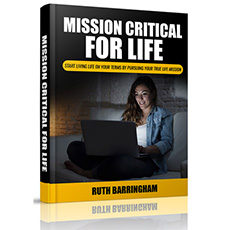
I wrote all about these things in my book, Mission Critical For Life : How to Start Living Life on Your Own Terms.

If only more people had read it.


Monday, 20 December 2021

A 10-Hour Writing Day

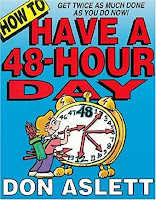
How to Have a 48 Hour Day

I previously told you about how I’d been re-reading one of my favourite books on productivity called, How to Have a 48 Hour Day, and in this book it says to work 10 hours a day, which I began to do.

I get up at 6am every day, even weekends, so from 6am to 4pm I make sure I’m productive - not busy.

At first I thought it would be difficult, but it isn’t at all. Some days I have to juggle things around, so if I decide to go to the beach for a couple of hours (I live at the coast) I make up the time later on, or I take some reading material that I want to catch up on, or take a notebook and do some writing or brainstorming.

Before I began the 10-hour day experiment, I was a quitter. As soon as something seemed too hard or too tedious, I’d quit. But now, I take a short 5 minute break and then carry on, no matter how much I feel like I don’t want to keep doing what I’m doing.

And the surprising thing is, once I sit down and get back to writing, it’s not that hard at all to keep going. It also works for other chores around the house, even cleaning the car isn’t hard once I add it to my daily to-do list, and then do it no matter what.

This is great for getting more writing done and for everything else I do.  It’s like having a deadline. I can’t stop working so it forces me to get as much done as I can. When I’m writing I force myself to stay in my chair, and soon I’m back in the ‘zone’ and getting plenty done. And it’s such a great feeling.

I also limit my online time to 30 minutes during my 10 hours, and use my writing computer for most of the time and only switch computers later to upload things.

10-hour days are actually easy to do and surprisingly fun.

https://amzn.to/2YbtGyw


Friday, 17 December 2021

4 Books Written in 3 Months

 It’s no secret that all writers look for ways to write more and earn more. And this time of year is when we’re all planning how much we can challenge ourselves in the New Year.

And as I’ve been telling everyone, I’ve been spending plenty of time reading about other writers’ plans for 2022. It’s always interesting to see what others are doing as well as collecting inspiration and ideas for myself.

And while I was re-reading my favourite time management book last week (How to Have a 48 Hour Day), which is so insightful as well as being entertaining as hell, the author, Don Aslett, talked about how he once wrote 4 books in 3 months.

What struck me about his achievement, was that at the time , he was vacationing at his holiday home and during the 3 months he was there, he also cut back over 100 feet of what he calls ‘the jungle’ (it’s a large property), laid several concrete steps, erected 100 feet of fencing, as well as catching up with other jobs like cleaning tools, weeding, and planting trees.

AND he still had time to write 4 books.

Inspiring?

Yes.

Makes me jealous?

Absolutely.

But it does spur me on to REALLY challenge myself next year to see not only how I can write more, but how to get more done in other areas of my life too.

Perhaps I can start having my own 48 hour days.

I’ll let you know when I finish my planning and hopefully it will inspire you to write more and earn more too.

https://amzn.to/2YbtGyw


Tuesday, 14 December 2021

Go Big Or Go Home. Write One Million Words a Year

I’ve been reading a lot of articles and blog posts lately about goals that writers have and how much writing they plan to do in the next year. And it’s all fascinating reading, not to mention inspiring and motivating.

But there was one blog post in particular that really caught my attention. It was written by prolific fiction author, Dean Wesley Smith. He talked about his goal to write 2.2 million words in 2022.

 https://www.deanwesleysmith.com/my-2022-challenge/.  

My flabber was ghasted when I read that. This is such a huge challenge he’s set for himself.

In a previous post, he’d talked in-depth about pulp writing speed which is how pulp writers used to earn their living years ago what was then called pulp fiction, because they were only paid by word count so they had to write at super speeds to be able to write for a living.

https://www.deanwesleysmith.com/pulp-speed-brought-forward-again/

In this blog post, he goes through six different pulp writing speeds, and the slowest one (Pulp Speed One) is 1 million words a year, and while that may sound like a lot, it breaks down like this:

Writing 3,000 words a day, is 84,000 words a month (26 days), which adds up to just over 1 million words a year. And if you can write 1,000 words an hour (which isn’t hard), 3,000 words a day is easy.

This all got me thinking about how much more I can write in a year if I really tried. 

To be realistic, I’ll have to divide my time and include everything I do, not just writing, but also sleeping, travelling, eating, cleaning, personal hygiene, family, TV, and everything else besides.

Plus I need to look at what writing I plan to do in the next 12 months, including books, ebooks, free reports, blog posts, articles, and freelance assignments.

Will I make it to one million words a year?

Who knows.

But I’m going to having great fun trying.


https://amzn.to/2YbtGyw 

Thursday, 9 December 2021

The Simple Way to Make Every Day Productive

How to Have a 48 Hour Day and Get Twice as Much Done
We all want to have productive days, don’t we? But what usually happens is that we get out of bed in the morning full of enthusiasm for all the things we’re going to accomplish, but somehow the time slips away and we realise we got nothing done.

Yet there are other days when we bounce out of bed and zip through everything we have to do and end the day feeling great about how much we got done.

So what’s the difference between those two days? What is it that makes some days more productive than others?

The ‘secret’ to having a productive day is really no secret at all.

I’ve recently been re-reading my favourite book on productivity, called, “How to have a 48 Hour Day” by Don Aslett. This man is king of getting things done and his book is such an entertaining read, and so useful that I’ve read it several times.

One of the things he says you should do, and it’s something he has alway done himself, is to have 10-hour days. This means having 10 productive hours every day. Not 10 ‘busy’ hours. The time must be spent productively, whether it means working, shopping (for essentials), gardening, cleaning, writing, or anything else that needs to be done. 

The author himself often works 16 hours a day. He even talks about when he wrote a book in 4 days because it was raining and he couldn’t do the gardening that he’d planned to do. Wow! Can you imagine being such an over-achiever? And he loves every minute of it and says that hard work is the cure for all of life’s ills. He says it’s no accident that those who are high achievers are seldom ill. They don’t have time to stop for anything.

He says to aim to stay productive 10 hours a day. Commit to it and always have a list of different jobs/tasks to do so you can switch if necessary or if you’re not in the mood.

And 10 hours a day of productivity is life-changing.

I used to be one of life’s quitters and would give up on something if it got too hard or seemed too tedious. But not any more. I became a 10-hours-a day-person after reading this book the first time, and it really changed my life for the better. And the best thing about it is that it was actually easy to do. It wasn’t difficult at all. I even enjoyed it.

And the changes are instant.

Try it for yourself. Just one week of 10-hour days is transforming.

Make it your New Year’s resolution. 

Download a copy of the book and start changing your life.


Get Twice as Much Done As You Do Now - How to Have a 48 Hour Day

https://amzn.to/2YbtGyw 

Wednesday, 8 December 2021

4 Horror Writing Markets and a Free Writing Competition

 Here are a few writing markets for you just to keep the creative juices flowing and possibly earn you some much needed writing income.

One of the markets is for a children's short story, so if you haven't written for this age range before, it might make it interesting for you.

Enjoy and happy writing.

Dark Moments Flash Horror
Black Hare Press are looking fo short horror stories on the theme, Circus.
Word Count: EXACTLY 100 words.
Deadline: 31st December 2021
Payment: 4cents (US)/word via Paypal
https://www.blackharepress.com/submissions/ 

Children's Alien Scary Stories
Raven & Drake open to submissions of stories on the theme: Alien
Reader age range is 10+
Word count: up to 3,000 words
Looking for scary but fun stories with a happy ending.
Payment: Digital copies of the anthology. 
No cash payment as it's a new market, but I'm including it because it's an interesting market (10+ age range) and can open up to new possibilities because chidlren can be raging fans once they find an author they like.
https://www.ravenanddrakepublishing.co.uk/seriescalls 

A Coming of Age Horror Anthology
Nowhere Fast pays homage to the well-loved theme, Coming of Age, and then adds a horror element. 
Did you ever just wish you could have made The Goonies a little gorier? That ET was actually evil?
Make your twist on these classics.
Any work featuring the actual characters from these movies will be rejected. 
Word Count: 3000-5000 Words 
Deadline: October 28 2022
Payment: 6cents/word plus one hard copy.
https://www.clashbooks.com/clash/2021/10/29/nowhere-fast
 
Counting Bodies Like Sheep
Short stories wanted for extreme horror anthology.
Fast-paced gory stories with the perfect blend of Extreme Horror + Splatterpunk + Dar Humor elements.
Word count: up to 3,000 max
Payment: 3cents/word plus one paperback copy.
Deadline: Sumissions open on 1st January 2022
Close 1st March 2022
http://theevilcookie.com/open-calls/ 

Free Short Story Competition
Curiosity Killed the Cat
Short story about a new discovery, invention, or insight that seems wonderful and glamorous on the outside, but which is truly insidious beneath the surface, or which goes terribly awry. Think 'Frankenstein.'
Word Count:1800-2200 words
Deadline: January 4th, 2022
Prize: $50 first place 
https://www.rainfictionpod.com/contests/writing-contest-3curiosity-killed-the-cat


Tuesday, 7 December 2021

Write 50,000 Words a Month, Every Month

The Monthly Challenge Writing Series
It’s now December (Yikes! Already?). Last month was November and as all writers know, it was also NaNoWriMo, a month when thousands all over the world take up the challenge to write a 50,000-word novel in a month.

And of those thousands, some make it and some don’t. But of those who make it, it does prove that it’s possible to write 50,000 words a month.

But what if you could write 50,000 words every month? I don’t mean that you should write a novel every 30 days, but what if the 50,000 words a month meant all your writing including articles, blog posts, emails, freelance submissions and all the other writing you do every month, including book writing?

Can you imagine how great it would be and how much money you could earn from your writing if you could write fifty thousands words a month, every month?

And while that may seem like a daunting amount, when you break it down, it’s only 1,667 words a day, which is only one article or short story.

Keeping up a writing schedule like this can have a huge increase in your income. 

And if you’re thinking that writing this much every month is too much, let me tell you that the really successful writers produce much more than this every month, usually double or triple this amount. Writing over 100k words every month might sound like a lot of work, but these writers don’t find it hard at all. In fact they love what they do which is probably why they’re so prolific.

So if you love to write, take the 50K a month challenge and see the difference it makes. 

Start with The Monthly Challenge Writing Series - 4 ebooks that guide you through 4 months of writing and earning money.

Are you up for the challenge?

Book 1 - Quick Cash Freelance Writing
https://ruthiswriting.com/books/MCWS1.html

Book 2 - Build a Lucrative Niche Website - In A Month
https://ruthiswriting.com/books/MCWS2.html

Book 3 - Fast & Profitable Article Writing
https://ruthiswriting.com/books/MCWS3.html

Book 4 - The One Month Author: How to Write a Book Faster & Better


Thursday, 25 November 2021

Why Willpower Won’t Help You Write

Willpower: Use it to write more?
We’ve all heard of the word Willpower and we’re told that if you can’t achieve something, or can’t get enough writing done, it’s because you don’t have enough willpower.

But what is willpower?

Many believe that it’s some kind of separate entity. It’s something you can invoke to help you. All you have to do is believe in it enough and it will magically appear and you can latch onto it and become a writing marvel.

Some people believe that having will power is not to help you to do something, but it’s a way to help you restrain from doing bad habits like over-eating, gambling, smoking, and excessive alcohol consumption, rather than helping you engage in new habits.

If you want to write more and write better what you need is determination, not willpower. This is what drives people to do what needs to be done, despite emotional and physical opposition.

Determination gives you a can-do attitude to stick with something and see it through to the end.
And you already have determination within you. It’s not an outside thing, separate from yourself. It’s already yours. You just have to use it.

And to be honest, if you love to write, then you really don’t need much determination. You only need to be in the right determined mindset to sit down and start writing, because as we all know, starting is the hardest thing.

But once you sit down and start writing, the rest is easy.

So don’t think you need willpower to write.

Just have the determination to sit in your writing chair for an hour or two every day.

The writer in you will take it from there.


The One Month Author
How to Write a Book Faster & Better

https://ruthiswriting.com/books/MCWS4.html

Download a copy for only 99c till the end of November 2021.


The One Month Author: How to Write a Book Faster & Better


Tuesday, 23 November 2021

Proof That You CAN Write a Book a Month

Photo by Thom Milkovic on Unsplash

There are so many disbelievers when it comes to the subject of writing a book in just a month. But it’s no surprise that those who say it can’t be done have never even tried, or they’ve given it a half-hearted attempt and quit.

Writing a book a month isn’t easy, but it’s not hard either. For those who want to do it, it’s not hard at all.


But let’s look at the math to see how do-able it actually is.


Say you wanted to write a 30,000-word novel. To do it in a month (30 days) you’d have to write at least 1,000 words a day, and that’s only about 3-4 pages.


Does that seem hard? No. 


Does that seem impossible? Absolutely not.


The mindset of writing a book is like the mindset of a marathon runner. To do either you need determination to see it through to the end.


Marathon runners are always determined. They train hard and when the day comes, they’re in the right mindset to do it.


Would-be authors on the other hand, aren’t determined and so they don’t train and don’t try.


But this month is November, which means there are millions of writers all over the world taking part in NaNoWriMo, the challenge to write a 50,000-word book in a month.


The determined ones succeed. The rest don’t.


What more proof do you need?


The One Month Author

How to Write a Book Faster & Better

https://ruthiswriting.com/books/MCWS4.html


Saturday, 20 November 2021

Wanna Know How To Get an Idea and Write a Book?

Whenever I'm talking (in person or on social media) to other writers, they often tell me that they think that writing a book is too hard, so they don't even start. And that's sad because writing (and finishing) a book manuscript not only gives you an enormous sense of personal achievement, but it's also a great way to earn passive income from writing, if you publish it.

I sometimes think that the reason they think it's hard, and why they never begin, is because they don't know where to start. I mean, how do you come up with an idea for a whole book?

The answer is that you don't. All you need is an idea and then you grow it from there. It doesn't need to be a big idea either, just the germ of one.

If you want to write fiction, it's best to stick to the genres you like to read. This is for several reasons including that you already know what these stories need to contain because you've already read so many of them, and also because writing has to be fun so you need to write what interests and entertains you.

Then you just need an idea of what you want to write about. For instance (and I'm making this up on the fly as I'm writing), say you like reading romance novels, so you want to write a romance book. 

But what would make a great story?

How about if it was about a guy who was really shy and a woman who liked him, but because he was so shy she thought he only liked her as a friend because she mistook his shyness for disinterest. 

And then how about if someone else, another woman, comes into the picture and she's really domineering and talks the shy guy into dating her, and at the same time, another guy asks the first woman out and she goes but only because she thinks the shy guy isn't interested in a romantic relationship with her. Or the second woman can be already known to the first woman and it's someone she already dislikes.

Now you can expand this even further and have a huge rivalry and hatred between the two woman and it spills over into their relationships with the guys and it all climaxes in a physical altercation between the two women.

And then the backlash from that could be that the first woman ends up being arrested and the other trashes her belongings while she's gone, and eventually the shy guy steps in to put a stop to it all and that's when the first woman realises that he really does care about her and they end up together after all.

I know that you're thinking that it's not the greatest of plots, but it's a quick idea I just came up with (feel free to use it if you want to though) and it can be played around with and changed until it's a fantastic story with a few crisis and subplots that all culminates in the girl finally getting her man. Tada! A happily ever after if I ever heard one. Although all romance books end that way.

But can you see how easily, in just a few minutes, I went from the idea or writing a romance novel to coming up with characters, crisis and plot? It wasn't the best but if I'd had more time I would do better.

So don't give up on writing a book. Think about what you want to write and then come up with an idea that you can flesh out until it's a useable story with a great plot. Or for nonfiction, think of a subject you want to write about, one that holds a lot of interest for you or that you know a lot about, and then expand that idea into topics you'd want to cover in your book.

And you can read more about how to go from idea, to outline to blueprint to finished manuscript in my latest article at https://ruthiswriting.com/articles/2021/write-a-book.html.

It's called, 'This is How to Write a Book.'

Enjoy


The One Month Author
How to Write a Book Faster & Better


Friday, 19 November 2021

Keep Writing Even If You Don’t Feel Like It

Bored Writer - how to keep writing even if you don't feel like it
Photo by Magnet.me on Unsplash

All writers (even the best of the best) face the challenging situation of writing when they really don’t feel like it. It happens to us all. You’re just not in the mood to sit down and write, but you have a deadline looming or a book to finish, and you need to get back to your writing spot, but the motivation just isn’t there.

So what can you do about it?


Well, I don’t know about you, but one thing that “Lockdowns” taught me was that when all distractions are removed (constitutional rights, going outside, living my life) I was much more motivated to sit down and write.


A couple of years ago I cracked a rib and couldn’t move much for a couple of weeks, and this week I had a minor operation on my back, which again has physically incapacitated me or a short while.


And during all these times, I wrote more because I was forced to sit down because there was nothing else I could do. Also because I decided myself to use these times to increase my writing output.


It was also during these times that the more I wrote every day, the easier and better it got.


So just think about that the next time you know you should be writing, but you just don’t feel like it.


And remember that the world’s most successful authors didn’t get to where they are because they gave in every time they didn’t feel like writing. They often felt that way too but they sat down and wrote despite not feeling like it.


And to be honest, even though I love to write, not wanting to do it happens almost every day. Until, that is, I sit in my chair and start writing.


Then it’s amazing how much writing I can do, even though I didn’t feel like it at first.


The One Month Author

How to Write a Book Faster & Better

https://ruthiswriting.com/books/MCWS4.html


Thursday, 11 November 2021

Want to Write More?

Earning Money Online Writing
The question I get asked the most is, 'How can I earn money writing?' And it's not only me who gets asked this question. I see it being asked online all the time.

It sometimes surprises me that people even need to ask this question because the answer is simple. 

I think what people are really asking is, 'How can I earn money QUICKLY from writing?' They're looking for a quick fix. But being a writer isn't a way to get-rich-quick. I mean sure, you can start earning money fast, but you won't get rich quick.

Instead, the simple answer to earning money from writing is to write more.

The most successful writers are those who outwork the rest.

Look at it this way. If you had a blog with a dozen pages of articles, and you'd written and published an ebook, how much money could you earn from that?

But what if you had a blog with 200+ pages, you'd written and published 20 ebooks, plus you constantly wrote and submitted freelance work to magazines and websites, and you wrote paid guest posts for other blogs to help promote your own?

How much money could you be earning then?

You see, it's up to you what you write and how much you write. Writers earn money in different ways, but whichever way you choose, if you're not out-working the rest, how can you possibly hope to earn more?

The important thing is to start writing. And don't stop. Don't say you're too tired, or you've had a busy day, or you just don't feel like it, or you have a headache, or a bad back (or any other physical excuse).

If Stephen Hawking could write books while sitting immobile in a wheelchair using only a twitch in one cheek to operate his computer, then the rest of us have no excuse.


The Monthly Challenge Writing Series:


If these 4 ebooks don't get you writing more, nothing will.

P.S. For the rest of this month (Nov 2021) The One Month Author is only 99 cents. 


Monthly Challenge Writing Series


Tuesday, 9 November 2021

A Simple ‘Trick’ To Get More Writing Done


Almost every morning I wake up full of good intentions of how much I’m going to accomplish in a day.

Hours later I look at the clock and wonder how the time disappeared so quickly.


Do you have days like that?


It used to be that the day seemed to fly by with little accomplished. Now though, things have changed, and although the day seems to still fly by, it’s passed by unnoticed because I was busy getting so much done.


I do whatever I have to do first thing in the morning including chores, phone calls, laundry, shopping, and then I get on with my writing. And I’m usually so focused that I even forget to have lunch.


When I finally stop and look at the time, I’m surprised to see that it’s mid or late afternoon. Sometimes it’s so late it’s dark outside.


These are great days when I’m so focused and so productive that I sit and work for hours and get so much writing done. I still feel as though I’ve lost a day (time-wise), but it doesn’t feel bad, not when I can see how much I’ve achieved. 


Sadly, not all days are like that, but when it happens, I do appreciate it. And it makes me feel great.


And it happens because I love what I do.


Try it yourself. 


And if you don’t know what to do, download one of my Monthly Challenge Writing Series ebooks, and see how much you can achieve in a day, a week and a month.


Are You Up For The Challenge?

https://ruthiswriting.com/books/MCWS1.html


Monthly Challenge Writing Series


Tuesday, 2 November 2021

The Right Way to Earn Money From Freelancing

Quick Cash Freelance Writing

I follow quite a few people on social media who are writers and they seem to be so good at getting the work published online on blogs, websites and in online anthologies and online magazines.

But lately I've been taking a closer look at the work they're getting published and where, and I made a surprising discovery.

I admit that I've been feeling a tiny bit jealous that they all seem to get so much of their work published. I kept wondering, how do they do it? I thought their work must be really good.

However, it seems that all their published work is unpaid. They seem to be submitting it to non-paying, online markets. And sometimes it's even WORSE than that. They submit their work to websites where you have to PAY for every submission.

I swear it made me do a quick Porky Pig impersonation. "A b-a-b-a-b that's crazy, folks." Why would anyone do so much writing and then not only give it away for free, but also pay someone else to publish it online?

Jealous? Not any more. There is no way I would let my work be published on someone else's blog or website so that they can earn money from my hard work. I know some would say that free publication can be great marketing. But not when you're giving it away all the time.

If you want to earn money from freelance writing, then your work needs to be submitted to a paying market. I advise against ever paying to submit work. I won't even enter writing competitions unless they're free. I figure that if I enter a writing competition and I win, that's great. It means I've earned money from my writing. And if I don't win, I still have my story or article and I can submit it somewhere else and even submit it to a paying market.

To be really successful as a freelance writer, you need to be fearless and don't hold back when it comes to finding markets for your work. Never think that it's not worth submitting your work or your idea for an article because it might be rejected. It might also be accepted.

And no matter how small the submission (reader's letter, joke, tip, etc), do it. Even if you don't earn much at least you'll earn something. And some of these smaller pieces can actually earn you a good ROI for the few minutes that it took you to write it.

Keep submitting ideas and stories all the time. Aim for 30 submissions in 30 days every month. That's 300 submissions a year. Can you imagine the success you'd have? And they don't have to be huge pieces of work. Like I said, even a small joke or a tip can earn you up to $100 for just 5 minutes work.

Make some of your submissions to printed markets like magazines, and others to online markets. If you keep up the 30 submissions a month, you can't fail.

And don't make excuses like, you have a full-time job or you have a family. These are just excuses because we always make time for the things we love.

And one of them should be writing.

https://ruthiswriting.com/books/MCWS1.html


Tuesday, 26 October 2021

Blog or Website? What’s the Difference?

Someone emailed me recently and said they wanted to set up and earn money online, but they weren’t sure if they should have a blog or a website because they didn’t know the difference between the two.

And a quick search online showed me that many people were asking the same thing - what’s the difference between a blog and a website?

The answer is that essentially, there is no difference, except that a website can be a site that is static and never changes, whereas a blog is updated often.

Mostly, a website is used for business, whereas a blog is akin to an online diary.

Many people combine the two and have a website with set pages (home page, about page, contact page, sales page, etc) and a blog section that they update with their latest offers and new stock announcements.

The reason people have blogs is because they are easy to update if you use blogging software, and search engines love sites with regular, fresh content.

Also, people who want a personal site where they regularly upload photos and stories about their life (travel, food, health, kids, etc), tend to have a blog and use blogging software like WordPress, to make it quick to update.

I use both. I have my website where I regularly upload new writing articles and my latest book information, plus I have this blog where I post shorter articles, and things that are time-sensitive such as open writing markets, or introductory price reductions of my books.

My ebook, Build a Lucrative Niche Website In a Month, is also about creating a niche blog, because it’s the same as a niche website.

Ultimately the choice is yours and you can call it what you want. A blog or a website.


https://ruthiswriting.com/books/MCWS2.html


Friday, 15 October 2021

Why Do You Want To Write?

It's great to want to be a writer, even better if it's how you want to earn your living.

But before you can take it to the next level, you need to know what kind of writer you want to be. What is it that you want to write?

When you imagine yourself as a writer, what are you doing? What are you writing?

Are you writing books? Articles? Copywriting? Journalism? Fiction? Non-fiction? Essays?

What is it that you want to write?

They say that once you go somewhere in your imagination you can go there in life.

But what if you don't know where you want to go and what you want to do?

I had the same issue when I first began writing, so  I did everything. I tried every kind of writing that I could. I tried whatever appealed to me. And that taught me not just what I was good at, but also what I wasn't good at. Writing erotic stories was something I was really, REALLY bad at.

I also learned what type of writing I enjoyed.

So if you're sitting on the proverbial fence, or you don't know what kind of writing you want to do, just start. It doesn't matter what you do, just do something. Take a course, buy a book, start journalling, start searching online, enter a competition, find some writing prompts.

Once you begin you'll feel motivated and soon you'll know what you want to do.

The Monthly Challenge Writing Series


Tuesday, 12 October 2021

The Easy Way to Write More

Wouldn't it be great if you could write more than you do now? What if you could sit down and find that you're far more productive and write more articles, book chapters, and stories in one sitting than you ever could before?

Is that even possible?

You bet it is, and it doesn't even have anything to do with writing faster.

If you want to write more, you need to want to do it.

Does that sound too simplistic? Well, it isn't.

You see, if there's one thing I've learned in life, it's that if you don't want to do something then you either won't do it, or you'll do it badly, or slowly. It's something all we humans inherently do. You'll know what I mean if you've ever watched a sulky teenager doing a household chore that they don't want to do. See the hilarious short video below: "How to avoid washing a car by Kevin the teenager - BBC"


It doesn't matter what it is, if we don't feel excited, motivated or we simply have no interest in doing something, we just won't do it.

And if 2020 taught us anything, it's that working from home is harder than going out to work because there's no boss, no set hours and far too many distractions. Being at home doesn't provide the motivation to sit down and start writing.

But the truth is that you can't wait for motivation before you start. Motivation won't show up for work until you do. I know, because I battle with this problem every day. 

The only way to defeat it is to have more bum in chair time and shut off all distractions. I have a computer that I use exclusively for writing so that I don't have all the usual online distractions to deal with. I have nothing on it but my writing files, and when I have to go online, I switch to my other computer and transfer my files on a flash drive.

You can't find motivation but it can find you.

And it always finds you when you're already working.

Want more help getting started?

Download my Monthly Challenge Writing Series and work your way through them all.

They'll get you started quickly.


Monthly Challenge Writing Series


Monday, 11 October 2021

50,000 Words A Month. A Life-Changing Amount of Writing

 Every November, writers all over the world take part in NaNoWriMo, which stands for National Novel Writing Month.

NaNoWriMo is all about writing a 50,000-word, first draft manuscript for a novel, and doing it in a month.

This challenge came about because most people never write that much in a month. In fact, most people never write nearly that much, which is why it's a challenge.

But it got me thinking. What if all writers aimed to write 50,000 words every month? Not just novel writing, but a compilation of all their writing - stories, articles, tips, letters, ebooks, blog posts, plus everything else that's written and published or submitted in a month?

Can you imagine how much that would change your life if you did it? Even if you missed the 50,000-word mark, what if you wrote 30,000 words every month?

Wouldn't that be amazing?

This is what my Monthly Challenge Writing Series ebooks are all about.

The latest one, 'Fast & Profitable Article Writing' is currently available for the introductory price of only 99 cents.

And that small investment will guide you through writing more articles in a month than you ever thought possible.

Are you up for the challenge or are you happy where you are and have no interest in doing and achieving more?

Don't wait for November.

Download your own copy, start writing now, and commit to seeing it through for the next 30 days.


Fast & Profitable Article Writing


Friday, 8 October 2021

Writing Challenge: Write 50K Words in a Month

 It's now October and the next month is November, or as we writers know it, NaNoWriMo.

Every year NaNoWriMo is held throughout the whole month of November.

National Novel Writing Month has grown from a small group of writers taking part in a yearly novel-writing challenge, to worldwide writing phenomena.

As you probably already know, NaNoWriMo is a challenge to begin writing a 50,000-word (or more) first draft manuscript for a novel starting at midnight on November 1st, and finish and upload it by midnight on November 30th.

I've done this challenge myself, and although it's not impossible to do, it is a lot of work and keeps me on track and writing much more than I usually do every month.

But what if you wanted to take part in NaNoWriMo but you didn't want to write a novel? What if, instead, you challenged yourself to write 50,000 words from all your writing in November - ebooks, articles, freelance submissions, blog posts, etc?

That means writing 1,667 words a day for 30 days. Can you do that?

Or how about you download my latest Monthly Challenge Writing Series ebook while it's still at its introductory price of only 99 cents?

It's called 'Fast & Profitable Article Writing and takes you through 30 days of writing articles and earning money.

And while you can't control exactly how much money you'll earn, you can control how much you write. 50,000 words in one month. And this ebook will get you started fast.


Fast & Profitable Article Writing

Fast & Profitable Article Writing


Tuesday, 5 October 2021

Do I Want to Protest Against Climate Change? Nope.

These days there are millions of people jumping on the Climate Change (formerly known as Global Warming) bandwagon and protesting in droves.

I've never been to one of these protests, nor will I ever because I'm busy doing my part to help the planet already, and I've been doing it for years.

YEARS!

- I don't support factory farming (it's one of the biggest polluters and don't get me started on cruelty)

- I eat mostly organic (non-organic is also a huge polluter)

- I drive very little and have a small car

- I always find ways to cut my electricity use (for cost as well as environmental reasons)

- I live frugally

- I try to live by the 5Rs of a zero-waste lifestyle  (refuse, reduce, reuse, recycle, rot)

- I only use environmental, sustainable household products

- I produce a low-to-no amount of garbage every day

- I recycle everything I can

- I refuse to buy overly packaged products

... and the list goes on.

I don't follow fads or jump on passing bandwagons. I live purposefully and kindly while I try to help the planet and animals. It's just something I've always done for as long as I can remember.  

It's actually really easy to be respectful of our planet and be kind and compassionate to animals. It also inspires others to do the same.

I'm also always busy writing, and in my book 'Mission Critical For Life' I lay out 10 easy-to-follow steps for finding and living your own life mission and you'll see how it can also help you to do your bit to help the planet at the same time, without having to drive to the nearest protest. But feel free to do so if that's what floats your boat.

Being Mission Critical For Life can help save you, your sanity, the planet, and everyone around you. 

While helping you live a stress-free, purposeful life on your own terms.


Mission Critical For Life


Thursday, 30 September 2021

How to Make Money Writing Articles

One of the questions that gets asked a lot online is how to make money writing articles? If you don't believe me, try doing a search for that exact phrase.

Writers want to write. They're always looking for ways to do it and earn money. And writing articles appeals to many.

The usual advice is to do freelance writing or to find clients to write for. This isn't a bad way to earn money writing because you get paid fast.

But what if you just want to sit and write articles and not have to submit them to magazines and websites or send them to clients for their approval?

I was once faced with this same dilemma. I wanted to sit and write articles and earn money without having to write for someone else. 

But was that even possible?

It turned out it was.

And this is what I talk about in my latest ebook, 'Fast & Profitable Article Writing.' It's the 3rd book in my Monthly Challenge Writing Series.

Step-by-step I show you 6 different ways you can earn money online writing articles. You can write about whatever you want and choose your own hours to write.

This new ebook is currently at the introductory price of only 99 cents.

Download a copy now, work your way through the chapters, and in just 30 days you'll be a fast & profitable article writer.

https://ruthiswriting.com/books/MCWS3.html

Fast & Profitable Article Writing


Tuesday, 28 September 2021

Plan? Outline? Or Just Write?

There's always an ongoing debate amongst writers as to whether or not to outline a book or article before you write it.

Another question is whether you should only write when you are inspired to do so.

For me (and for any serious writer) waiting for inspiration is a waste of time because it rarely happens. Although it does come whenever you sit down and start writing.

When I sit down and write, it's usually because I want to write and not because I'm so pumped with inspiration and motivation that I can't wait to get started. That does happen. But not often.

As to outlining, I go further than that and plan what I'm going to write. Whenever I get a great idea, I write it down immediately in as much detail as I can. I simply stop whatever I'm doing and capture my idea in writing.

I also make plans of what I'm going to write and when. I make lists and copious notes. And then I outline exactly what I'll be writing. If it's a book, I go even further than that and write out a blueprint.

Why do I do all this?

Because it makes me happy. I like to know what I'm going to write. It also makes it easier. I just look at my plan and write my outline. Then I look at my outline to do my writing. Working this way frees up my creative mind while keeping me on track and on topic.

Another added bonus is that it helps me to write more. My system of planning, outlining, and writing makes the whole process easy, faster, and most of all, more enjoyable. And we all do more of what we enjoy.

In my new ebook, 'Fast & Profitable Article Writing,' I show you how you can earn money writing articles, and make it not only fast and profitable, but also, fun.

Grab it now at the introductory price of only 99 cents.


Monday, 27 September 2021

Switch It Up and Write More

One of the biggest challenges of being a writer is how to write more. I've said it before and I'll say it again. You need to write more if you want to earn more. Unless you're fortunate enough to have a production company turn your novel into a multi-million dollar blockbuster movie (which is so unbelievably rare), you need to keep writing.

But sometimes it can be a strain to sit and work continuously on a big writing project.

I've read a lot of work by the well-known copywriter, Bob Bly. He is a prolific writer, and one of the things that he always says is that he always makes sure he has several ongoing writing projects to work on so that if he gets bored with one, he switches to another. That way, his work stays interesting and his ideas are fresh.

I always remember that because it's how I work as well. I'm always working on more than one thing, so when I find I'm slowing down on what I'm working on, I put it away and work on something else instead.

For instance, yesterday I was working on a new chapter for a book. When I finished it, I switched to writing a blog post, and then I proof-read an article.

There are many times when I can work non-stop on one project and those times are great. But on days when I'm a bit distracted, I simply switch to another task.

And there is always something to work on. I like to have multiple streams of income which gives me so many varied projects.

Switching is a way to stay productive.

Quick Cash Freelance Writing
The first book in a four-part series on how to write and earn money.